
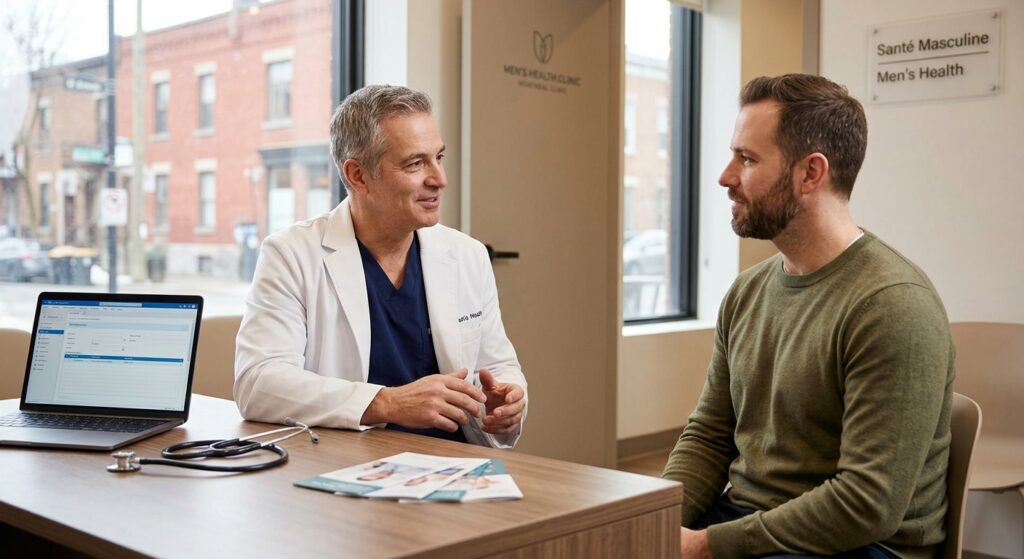
Men’s Health Clinic in Montreal
Men’s health concerns can affect energy, sexual wellbeing, physical comfort and quality of life. Speaking with a healthcare professional can help you understand possible causes and decide whether further assessment or treatment is appropriate.
GLIF Medical in Montreal offers confidential consultations for selected men’s health and intimate health concerns at our clinic in Verdun (Île-des-Sœurs). Dr. Peguy Télusma, MD, a licensed family physician with additional training in aesthetic medicine, reviews your symptoms, medical history and treatment goals before discussing suitable options.
Depending on your individual needs and medical assessment, services may include hormone assessment and hormone therapy, Scrotox, penile platelet-rich plasma (PRP), penile neuromodulator treatment and shockwave therapy.
Book a Men’s Health Consultation in Montreal
Discuss your concerns privately with the clinic and find out which assessment or treatment options may be appropriate for you. No referral is needed.
Book an appointment online or call (514) 665-0558.
Quick Answer: What Does a Men’s Health Clinic in Montreal Do?
A men’s health clinic assesses selected physical, hormonal, sexual and intimate health concerns. At GLIF Medical, the consultation begins with a review of your health history, symptoms and goals. Depending on the assessment, the doctor may discuss hormone-related care, Scrotox, penile PRP, penile neuromodulator treatment or shockwave therapy.
Not every service is appropriate for every patient. Recommendations depend on the concern being assessed, relevant medical findings, potential risks, expected benefits, available evidence and individual treatment goals. The first consultation is an evaluation: no treatment is performed without a prior discussion and informed consent.
Key Takeaways
- A men’s health consultation starts with an individual medical assessment.
- Patients can discuss sensitive concerns in a private, confidential clinical setting.
- Hormone-related symptoms may require a medical history, examination and appropriate laboratory testing.
- Scrotox, penile PRP, penile neuromodulator treatment and shockwave therapy have different purposes and limitations.
- Potential benefits, side effects, alternatives and uncertainties should be discussed before treatment.
- Results and recovery vary according to the treatment and the individual.
- Follow-up may be required to review treatment response and determine next steps.
Men’s Health Services at GLIF Medical
The appropriate starting point depends on your symptoms and what you want to discuss. At GLIF Medical, a consultation can help establish whether a particular service is suitable or whether another type of medical assessment is needed.
- Hormone assessment and hormone therapy: Evaluation of possible hormone-related symptoms and discussion of treatment when medically indicated.
- Scrotox: Botulinum toxin injections in the scrotal area for selected concerns following assessment.
- Penile PRP: A procedure involving platelet-rich plasma that requires a discussion of its intended use, evidence, risks and limitations.
- Penile neuromodulator treatment: An injectable treatment that requires individual assessment of its intended indication, suitability and available evidence.
- Shockwave therapy: A non-invasive treatment using acoustic waves that may be considered for selected indications.
Hormone Assessment and Hormone Therapy in Montreal
What Is a Hormone Assessment?
A hormone assessment evaluates whether hormone levels or other medical factors could be contributing to a person’s symptoms. Symptoms alone do not establish a hormone deficiency, so findings must be interpreted in the context of the patient’s health and clinical history.
Someone may seek an assessment because of concerns such as:
- Persistent low sex drive
- Ongoing tiredness or reduced energy
- Changes in sleep
- Changes in muscle mass or physical function
- Other symptoms that may warrant medical investigation
Depending on the clinical situation, an assessment may involve a medical consultation, physical examination and blood tests. The tests selected depend on the symptoms and the suspected cause.
Dr. Télusma reviews the available information before discussing possible explanations and next steps. These symptoms can have several causes and should not automatically be attributed to low testosterone or another hormone imbalance.
When May Hormone Therapy Be Considered?
Hormone therapy may be considered when a clinical assessment supports treatment for a specific medical indication. The decision depends on the patient’s symptoms, relevant test results, medical history, potential contraindications and treatment goals. Learn more about hormone therapy at GLIF Medical.
Testosterone therapy is not appropriate for everyone and should not be started solely because of tiredness, changes in libido or the effects of ageing. Appropriate diagnosis, testing, discussion of potential benefits and risks, and follow-up monitoring are important when testosterone treatment is being considered. For clinical recommendations, consult the Endocrine Society’s clinical practice guideline on testosterone therapy.
How Does Hormone Therapy Work?
Hormone therapy aims to address a specific hormone-related medical issue using an appropriate treatment plan. The medication, dose, monitoring requirements and expected response depend on the indication and the individual’s health. Follow-up usually includes repeated laboratory tests to confirm that hormone levels stay within a safe range.
Before starting treatment, ask about expected benefits, possible side effects, monitoring, alternatives and circumstances in which treatment may need to be adjusted or stopped.
Scrotox in Montreal
What Is Scrotox?
Scrotox is a term commonly used for botulinum toxin injections into selected muscles of the scrotal area. Depending on the indication and individual assessment, treatment may be considered for concerns such as excessive scrotal sweating or strong contraction of the dartos muscle.
The suitability of Scrotox depends on the patient’s concerns, medical history, expectations and understanding of possible benefits and risks. It should not be assumed to provide the same result for every patient. At GLIF Medical, Scrotox treatment is considered only after an individual assessment of suitability, expected outcomes and potential risks.
Who May Be Suitable for Scrotox?
Scrotox may be discussed with selected patients who experience bothersome scrotal sweating or related concerns. A medical assessment is needed to determine whether the procedure is appropriate and whether another approach would be more suitable.
During the consultation, discuss the intended outcome, potential side effects, treatment limitations and what to expect during recovery. The doctor will determine whether treatment is appropriate based on the individual situation.
How Long Does Scrotox Take?
A Scrotox appointment takes approximately 30 minutes. Results are temporary, typically lasting several months, and follow-up is planned to decide on a suitable maintenance interval. Recovery and response vary between individuals.
Shockwave Therapy for Men in Montreal
What Is Shockwave Therapy?
Shockwave therapy uses acoustic waves delivered to a selected treatment area. Low-intensity shockwave therapy has been studied for certain cases of erectile dysfunction, but evidence and recommendations depend on the specific condition, treatment protocol and patient characteristics.
It is important to distinguish between treatment indications. Evidence for one condition should not automatically be applied to other men’s health concerns. GLIF Medical offers shockwave therapy for men, with suitability determined through an individual assessment.
Who May Be Considered for Shockwave Therapy?
Suitability depends on the patient’s symptoms, health history, diagnosis and treatment goals. Before recommending shockwave therapy, the doctor should consider whether the treatment is appropriate for the specific condition and explain the available evidence, alternatives and limitations.
Clinical guidance from the European Association of Urology discusses low-intensity shockwave therapy in the context of selected patients with erectile dysfunction. Recommendations should be interpreted in relation to the individual clinical situation.
How Many Shockwave Therapy Sessions Are Needed?
There is no single session schedule that is suitable for every patient. Sessions last about 20 to 30 minutes, and a typical protocol includes several sessions spaced a few weeks apart. The recommended number and timing depend on the condition being treated, the protocol used, the patient’s health and the response to treatment.
During your consultation, ask:
- What condition is the treatment intended to address?
- What evidence supports its use for your particular concern?
- How many sessions are being proposed and why?
- What benefits and limitations should you realistically expect?
- What alternatives are available?
- How will the response to treatment be evaluated?
What Happens After Shockwave Treatment?
Recovery requirements depend on the treatment protocol and the individual. Some patients may return to their usual activities promptly, but your provider should give you instructions specific to your procedure.
After treatment, ask your provider about possible temporary sensitivity or discomfort, activity restrictions, symptoms that should be reported and the timing of any follow-up appointment.
Results are not guaranteed and may vary. Your doctor should explain how treatment response will be assessed and what to do if your symptoms persist or change.
Penile PRP and Penile Neuromodulator Treatment
What Is Penile PRP?
Platelet-rich plasma (PRP) is prepared from a sample of the patient’s blood and contains a concentrated amount of platelets. Penile PRP refers to the use of this preparation in the penile area for a proposed therapeutic purpose. At GLIF Medical, penile PRP is performed in the clinic, usually under local anesthesia, and an appointment generally lasts 45 to 60 minutes.
Evidence for penile PRP varies by intended use, and it should not be presented as a guaranteed treatment for erectile dysfunction, sexual performance or other intimate health concerns. Before considering the procedure, discuss the evidence, uncertainty, potential risks, alternatives and expected costs with a qualified healthcare professional.
What Is Penile Neuromodulator Treatment?
Neuromodulator treatments use botulinum toxin to affect the activity of selected muscles or nerve signalling. The suitability and evidence for treatment in the penile area depend on the specific indication and proposed protocol. It is not a first-line option and is not suitable for all patients.
A consultation should clarify the intended purpose of the treatment, whether it is appropriate for your circumstances, the limitations of the available evidence, potential adverse effects and any alternatives. Do not assume that evidence for botulinum toxin in one part of the body applies to penile treatment.
For both procedures, the decision to proceed should follow an individual medical assessment and an informed discussion of benefits, risks and uncertainties.
Confidential Men’s Health Care at GLIF Medical
Is Men’s Health Care Confidential?
Yes. Men’s health and intimate health concerns can be personal, and consultations at GLIF Medical are confidential. Medical records are protected in accordance with Québec’s laws on the protection of personal information. Patients can discuss their concerns with the doctor and ask questions about assessment and treatment options without judgment.
Your consultation is an opportunity to share relevant symptoms, medical history, previous treatments and concerns that may affect treatment suitability. You can also ask how your medical information is handled and what to expect during follow-up.
Men’s Health Treatment Overview
The following table provides a general overview of the services discussed on this page. Durations, recovery and results are general estimates, not guarantees. Your exact plan is set during the consultation with Dr. Télusma.
| Treatment | Duration | Recovery | Results | Frequency |
|---|---|---|---|---|
| Hormone assessment | 45–60 min | None | Variable, per care plan | As per follow-up |
| Scrotox | 30 min | 24–48 h | Temporary (3–6 months) | Every 4–6 months |
| Penile PRP | 45–60 min | No particular downtime | Progressive, variable | Personalized protocol |
| Penile neuromodulator | 30 min | 24–48 h | Temporary (3–4 months) | Every 3–4 months |
| Shockwave therapy | 20–30 min | None | Progressive, variable | 6–12 sessions |
For treatment costs, see our pricing and financing page, and confirm recovery instructions and follow-up requirements with the clinic before booking a procedure.
When Should You Consider a Men’s Health Consultation?
You may wish to speak with a healthcare professional when a physical, hormonal, sexual or intimate health concern is persistent, troubling or affecting your quality of life. You do not need to know which treatment you need before arranging a consultation.
Reasons to seek medical advice may include:
- Changes in sexual health: Persistent changes in sexual function or other intimate health concerns.
- Low sex drive: A continuing change in sexual desire that you would like assessed.
- Possible hormone-related symptoms: Ongoing tiredness, changes in sleep or muscle mass, or other symptoms that may need investigation.
- Excessive scrotal sweating: Sweating or discomfort that affects daily comfort.
- Questions about intimate treatments: Concerns about the purpose, evidence, safety or suitability of an available procedure.
- Follow-up after treatment: A need to review your response, discuss side effects or consider the next steps.
Seek prompt medical attention for sudden or severe symptoms. Sudden, severe testicular pain, for example, requires urgent assessment rather than a cosmetic treatment consultation.
What Should You Know Before Men’s Health Treatment?
Before proceeding with any men’s health treatment, make sure you understand what it is intended to do, whether it is appropriate for you and what the available evidence says about its benefits and limitations.
- ✓Purpose: What condition or concern is the treatment intended to address?
- ✓Suitability: Does your medical history support considering this option?
- ✓Evidence: What is known, and what remains uncertain, about the expected results?
- ✓Risks: What side effects, complications or limitations should you understand?
- ✓Alternatives: Are there other medical or non-medical options to consider?
- ✓Recovery: What aftercare or activity restrictions may apply?
- ✓Follow-up: How and when will your response be reviewed?
- ✓Cost: What is included in the quoted price, and could additional visits be needed?
Provide accurate information about your medical history, medications, allergies and previous procedures. Ask questions if any part of the treatment plan is unclear, and make your decision only after you understand the potential benefits, risks and alternatives.
Frequently Asked Questions About Men’s Health Clinics in Montreal
What services does a men’s health clinic in Montreal provide?
Services vary by clinic. GLIF Medical offers assessment and discussion of selected men’s health concerns, with potential options including hormone-related care, Scrotox, penile PRP, penile neuromodulator treatment and shockwave therapy. The doctor determines suitability based on the individual assessment.
Is the consultation confidential?
Yes. All consultations at GLIF Medical are confidential, and medical records are protected in accordance with Québec’s laws on the protection of personal information.
Do I need a referral from my family doctor?
No. You can book directly at GLIF Medical without a referral. Dr. Télusma performs the initial medical evaluation himself.
Are men’s health treatments covered by RAMQ?
The men’s health treatments offered at GLIF Medical are private services that are not covered by RAMQ. Costs are discussed during the initial consultation, and some treatments may be eligible for reimbursement by private insurance.
Do I need a medical assessment before treatment?
Yes. An individual assessment is important before injectable procedures, hormone therapy or other medical treatments. It helps identify relevant health factors, clarify the purpose of treatment and determine whether the option is appropriate.
Is hormone therapy suitable for every man?
No. Hormone therapy is considered when clinical findings support a specific indication. Symptoms such as tiredness or low libido can have multiple causes, so appropriate evaluation and testing may be needed before treatment is recommended.
Does shockwave therapy guarantee results?
No. Results are not guaranteed. Evidence and recommendations depend on the condition being treated, the protocol and the patient’s circumstances. Your healthcare professional should explain the potential benefits, limitations and alternatives before treatment.
Are there side effects?
As with any medical intervention, side effects are possible and vary by treatment. Dr. Télusma discusses potential side effects, contraindications and alternatives during the consultation, before any intervention.
How can I book a men’s health consultation at GLIF Medical?
You can book online through Jane or call (514) 665-0558. The clinic is located at 14 Place du Commerce, Suite 430, Verdun (Île-des-Sœurs), Montréal. You can discuss your concerns and ask which appointment type is appropriate.
Book a Men’s Health Consultation in Montreal
If you have questions about hormone-related symptoms, scrotal sweating, intimate health procedures or shockwave therapy, a consultation can help you understand the available options and whether further assessment is appropriate.
At GLIF Medical, Dr. Peguy Télusma, MD, reviews your concerns and medical history before discussing a suitable plan. Treatment recommendations are individualised, and potential benefits, risks, limitations and follow-up should be considered before proceeding. Questions? Contact the clinic.
Ready to Discuss Your Men’s Health Concerns?
Contact GLIF Medical to arrange a confidential consultation in Montreal.
Book an appointment or call (514) 665-0558.
Medical information on this page is for general educational purposes and does not replace an individual medical assessment, diagnosis or treatment advice. Suitability, risks and expected outcomes vary by patient and treatment.