Fractional CO2 Laser Montreal for Full-Face Skin Resurfacing
Looking for Fractional CO2 Laser Montreal treatment to improve skin texture, acne scars, fine lines, enlarged pores, or uneven complexion? At GLIF Medical, fractional CO2 laser resurfacing is offered by Dr. Peguy Télusma, MD, at the clinic in Verdun, Montréal. This physician-led treatment uses controlled laser energy to create microscopic columns of renewal in the skin while leaving surrounding tissue intact, supporting collagen remodeling and gradual skin improvement.
A full-face CO2 laser treatment can be considered when surface-level skincare is not enough to address visible texture changes, certain scars, wrinkles, enlarged pores, or sun-related skin changes. The treatment intensity is adapted to the patient’s skin, concerns, goals, and expected recovery time following a medical assessment.
At GLIF Medical, the objective is not simply to perform a laser treatment. The goal is to determine whether fractional CO2 resurfacing is appropriate for your skin and to create a medically guided treatment plan based on realistic expectations.
What Is Fractional CO2 Laser Treatment?
Fractional CO2 laser treatment is a form of skin resurfacing that uses carbon dioxide laser energy to create microscopic treatment zones within the skin. These controlled areas stimulate the body’s natural healing response and encourage collagen remodeling.
Unlike fully ablative resurfacing, fractional treatment does not treat the entire skin surface at once. Healthy skin remains between the microscopic treatment columns, which can support the healing process and allow the treatment to be adjusted according to the patient’s needs.
The treatment can target several concerns at the same time, including:
- Acne scars and selected superficial scars
- Fine lines and visible signs of skin aging
- Enlarged or prominent pores
- Uneven skin texture
- Uneven complexion and certain sun-related changes
- Overall loss of smoothness and skin quality
How Does CO2 Laser Resurfacing Work?
A fractional CO2 laser delivers precisely controlled energy into selected areas of the skin. This creates microscopic columns of treatment rather than removing the entire surface layer uniformly.
The controlled injury triggers a natural repair response. As the skin heals, collagen remodeling takes place progressively. This is why improvements are generally not limited to the first few days after treatment. Skin texture and overall appearance can continue to develop over the following weeks as the remodeling process progresses.
Why Is Fractional Treatment Different?
The fractional approach treats microscopic zones while leaving areas of surrounding skin untreated. This allows the treatment to address deeper skin remodeling while avoiding treatment of the entire facial surface in the same way.
Treatment depth and intensity can be adjusted according to the concern being treated, the patient’s skin characteristics, tolerance, and desired outcome. A personalized approach is particularly important when treating different skin types or concerns such as acne scarring.
What Skin Concerns Can CO2 Laser Treat?
Fractional CO2 laser Montreal treatment may be considered for several concerns involving skin texture and surface quality. The appropriate treatment depends on the type, depth, location, and severity of the concern.
| Skin concern | How resurfacing may help |
|---|---|
| Acne scars | May improve the appearance and texture of selected superficial acne scars through controlled resurfacing and collagen remodeling. |
| Fine lines | Can support smoother-looking skin by stimulating collagen remodeling. |
| Enlarged pores | May improve the appearance of prominent pores and uneven skin texture. |
| Uneven texture | Resurfacing can help create a smoother and more refined skin surface over time. |
| Sun-related skin changes | May help improve selected surface changes associated with cumulative sun exposure. |
CO2 Laser for Acne Scars in Montreal
Acne scars are not all the same. Some are shallow and uneven, while others are deeper or have specific scar patterns that may require a different approach. Fractional CO2 laser can be considered for selected acne scars because controlled resurfacing can stimulate collagen remodeling and improve the appearance of irregular skin texture.
At GLIF Medical, acne scarring is assessed individually before treatment. Depending on scar type and skin characteristics, a treatment plan may involve fractional CO2 laser alone or another procedure as part of a broader approach.
For another approach to improving selected acne scars and uneven skin texture, read our guide to microneedling benefits, the treatment process and results.
For additional information about acne scar concerns and related treatment options, see acne scar treatment at GLIF Medical.
CO2 Laser for Wrinkles, Pores and Skin Texture
Fractional CO2 resurfacing can be useful when the main concern is overall skin quality rather than one isolated feature. The treatment may help improve the appearance of fine lines, enlarged pores, uneven texture and certain superficial scars.
Because collagen remodeling develops progressively, the skin may continue to change after the initial recovery period. The objective is generally a smoother, more even-looking complexion rather than an artificial change in facial appearance.
CO2 resurfacing does not replace treatments designed to restore lost facial volume. When volume loss is a primary concern, other medical aesthetic options may be considered separately following assessment.
Who May Be a Candidate for Fractional CO2 Laser?
A person considering fractional CO2 laser should first have a medical assessment. The treatment may be appropriate for adults who want to improve specific concerns such as skin texture, acne scars, fine lines, enlarged pores, or selected sun-related changes.
Factors Considered Before Treatment
- Current skin condition and skin type
- The depth and type of scars or texture concerns
- Recent sun exposure or tanning
- Current skincare products and medications
- History of unusual or problematic scarring
- Expected downtime and recovery requirements
- Realistic treatment goals and expected results
A consultation helps determine whether fractional CO2 laser is suitable or whether another treatment may be more appropriate.
What Happens During a CO2 Laser Treatment?
The exact treatment plan varies according to the area and desired outcome. A typical treatment pathway involves several stages:
- Medical assessment: Your skin, concerns, medical history and treatment goals are reviewed.
- Skin preparation: The treatment area is prepared according to the clinical protocol.
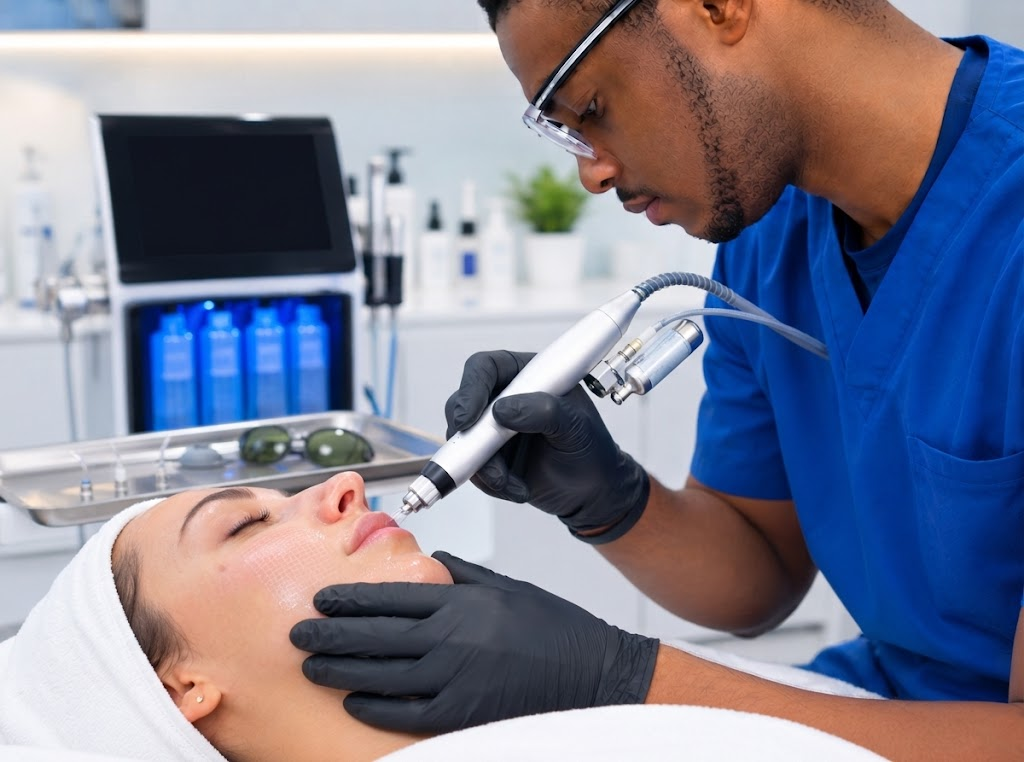
- Laser treatment: Controlled fractional CO2 energy is delivered to the selected areas.
- Immediate aftercare: The skin is assessed and appropriate post-treatment instructions are provided.
- Recovery: Redness, sensitivity and flaking can occur while the skin heals.
- Progressive improvement: Collagen remodeling continues after the initial healing period.
CO2 Laser Recovery and Downtime
Recovery depends on the intensity of treatment and individual skin response. After fractional CO2 laser resurfacing, temporary redness, sensitivity, dryness or flaking may occur.
At GLIF Medical, recovery can range from several days to approximately one or two weeks depending on the treatment intensity. Your specific recovery instructions should always take priority over general information because the appropriate aftercare can vary from person to person.
Supporting the Skin During Recovery
- Use the gentle cleansing and moisturizing products recommended after treatment.
- Protect treated skin from sun exposure and use appropriate daily sun protection.
- Avoid picking, peeling or aggressively exfoliating the treated skin.
- Follow the clinic’s instructions regarding skincare products and activities during recovery.
Appropriate aftercare is an important part of the treatment process and can help support comfortable healing.
Is Fractional CO2 Laser Suitable for Every Skin Type?
Fractional CO2 laser requires careful assessment for every patient, and skin type is an important part of that assessment. People with darker skin tones may have a higher risk of post-inflammatory hyperpigmentation after certain laser treatments, so treatment parameters must be selected carefully.
This does not mean that every person with a darker skin tone is automatically excluded from laser treatment. Instead, suitability, treatment intensity, risks, recovery and alternatives should be discussed with a qualified medical provider before proceeding.
A medical consultation is therefore an important first step before full-face CO2 resurfacing.
How Many CO2 Laser Sessions Are Needed?
The number of sessions depends on the treatment goal, skin condition, scar depth, desired level of resurfacing and the intensity that is appropriate for the individual patient.
Some patients may notice meaningful improvement after one higher-intensity treatment, while others may benefit from a series of treatments performed with appropriate recovery periods. There is no universal number of sessions that applies to every patient.
The treatment plan should therefore be based on the clinical assessment rather than a fixed package or predetermined number of sessions.
CO2 Laser vs. Microneedling for Skin Resurfacing
Fractional CO2 laser and microneedling can both be used to improve skin texture and stimulate collagen, but they work differently and may be appropriate for different concerns.
| Treatment | Main approach | Common focus |
|---|---|---|
| Fractional CO2 Laser | Controlled laser resurfacing with microscopic treatment columns. | Texture, selected scars, fine lines, pores and surface irregularities. |
| Microneedling | Controlled mechanical micro-injuries using fine needles. | Texture, selected scars and collagen stimulation. |
Neither treatment is automatically better for every patient. The right option depends on the concern, skin characteristics, desired result and acceptable recovery period. Explore microneedling at GLIF Medical when comparing resurfacing options.
If you are also exploring non-surgical aesthetic treatments for other concerns, our guide to non-surgical double chin reduction options in Montreal explains how treatment choices depend on the area and the individual’s goals.
What Results Can You Expect From CO2 Laser Resurfacing?
Results develop progressively rather than appearing immediately. During the initial recovery period, the skin may look red or irritated before settling. As healing progresses, collagen remodeling can contribute to improved texture and a smoother-looking complexion.
Potential improvements include:
- Smoother-looking skin texture
- Reduced appearance of selected acne scars
- Softer-looking fine lines
- More refined-looking pores
- A more even-looking complexion
Results vary according to the individual, treatment settings, skin condition, lifestyle, sun exposure and the concern being treated. Fractional CO2 laser does not permanently stop the natural aging process, so skin will continue to change over time.
Why Choose GLIF Medical for CO2 Laser Montreal?
GLIF Medical provides physician-led medical aesthetic care in Montréal, with treatment planning based on individual assessment rather than a one-size-fits-all approach.
- Physician-led care: Treatment is offered by Dr. Peguy Télusma, MD.
- Personalized assessment: Skin characteristics, concerns and treatment goals are reviewed before treatment.
- Adjustable treatment approach: Treatment intensity can be adapted to the patient’s needs and expected recovery.
- Medical aesthetic setting: The treatment is provided at GLIF Medical in Verdun, Montréal.
- Comprehensive skin care planning: CO2 laser can be considered alongside other treatments when clinically appropriate.
About Dr. Peguy Télusma, MD
Dr. Peguy Télusma is a physician providing medical aesthetic care at GLIF Medical in Montréal. Her medical background and continuing education in laser and aesthetic skin treatments support a medically guided approach to laser resurfacing.
The consultation is an opportunity to discuss your skin concerns, expected results, recovery requirements and whether fractional CO2 laser is the most appropriate option for you.
CO2 Laser Treatment Details at GLIF Medical
| Treatment | Fractional CO2 Laser, Full Face |
| Location | GLIF Medical, Verdun, Montréal, Québec |
| Address | 14 Place du Commerce, Suite 430, Verdun (Île-des-Sœurs), Montréal, QC H3E 1T5 |
| Provider | Dr. Peguy Télusma, MD |
| Typical treatment time | Approximately 30 minutes |
| Current price | CA$2,000 |
| Phone | 514-665-0558 |
Medical Consultation Before Fractional CO2 Laser
A personalized consultation is the starting point for safe and appropriate treatment planning. During the assessment, you can discuss the specific skin concern you want to improve, your previous treatments, current skincare routine, medications, sun exposure and expectations.
Your skin type and the possibility of post-inflammatory pigmentation are also important considerations when deciding whether fractional CO2 resurfacing is suitable and how aggressively it should be performed.
If you are unsure which medical aesthetic treatment is appropriate for your concern, you can explore the Aesthetic Medicine Consultation at GLIF Medical.
Why Medical Assessment Matters for Laser Resurfacing
Laser resurfacing should not be selected based only on a photograph or a general description of another person’s results. Skin type, scar characteristics, current skin condition, medications and previous treatments can all influence treatment planning.
For Canadian information on the safe use and regulation of medical devices, including devices used in healthcare settings, you can refer to Health Canada’s medical devices guidance. A qualified medical assessment remains important before deciding whether laser resurfacing is appropriate for your skin.
Book Fractional CO2 Laser Treatment in Montreal
If you are considering Fractional CO2 Laser Montreal treatment for acne scars, fine lines, enlarged pores, uneven texture or selected skin concerns, GLIF Medical can assess your skin and determine whether full-face fractional resurfacing is appropriate for your goals.
Start With a Personalized Assessment
Meet with Dr. Peguy Télusma, MD, at GLIF Medical in Verdun, Montréal, to discuss your skin concerns, treatment options, expected recovery and realistic results.
Last updated: October 09, 2026